Skip to content
You can be fined up to $1,000 a day for building without a permit in Massachusetts. That single number stops a lot of homeowners cold — and it should. The tricky part is that most people genuinely can’t tell which projects need a permit and which don’t. Guess wrong, and a weekend project turns into an expensive headache.
This guide gives you the plain-English version: what needs a permit, what doesn’t, what it costs, how long it takes, and who’s supposed to pull it. We’ve handled this process across MetroWest towns since 2014, so we’ll point out where homeowners trip up.
Key Takeaways
- In Massachusetts, almost any remodel that changes structure, layout, or electrical/plumbing/HVAC systems needs a building permit from your local building department (780 CMR, Massachusetts State Building Code).
- Cosmetic work — paint, flooring, a like-for-like faucet swap — usually doesn’t.
- A major renovation permit typically runs $500–$1,500, and the town must approve or deny within 30 days.
- Skipping a permit risks fines up to $1,000/day, denied insurance claims, and resale problems.
Do You Actually Need a Permit to Remodel in Massachusetts?
For most real remodels, yes. As of 2026, the Massachusetts State Building Code (780 CMR) requires a permit to construct, reconstruct, alter, repair, remove, or demolish a structure — or to install or alter regulated electrical, plumbing, or HVAC equipment (Mass.gov, Massachusetts law about home improvement). If your project touches structure, systems, or layout, assume a permit is on the table.
Here’s the simple mental model we give clients: structure, systems, or square footage = permit. Moving a wall changes structure. Relocating a sink changes systems. Finishing a basement adds living square footage. Each one triggers a permit. Cosmetic refreshes that leave all three untouched usually don’t.
Why does Massachusetts care so much? A permit isn’t a cash grab. It puts a licensed building inspector between your family and unsafe wiring, undersized beams, or a deck that can’t hold the weight it promises. The permit is the paper trail that proves the work was done to code.
According to 780 CMR, a building permit is required to construct, alter, repair, or demolish a structure, or to install regulated electrical, plumbing, and mechanical systems (Mass.gov, 2026). The permit is issued by your local building department, not the state — which is why the details shift from town to town.
What Remodeling Projects Need a Permit (and Which Don’t)?
Most structural and system work needs a permit; most cosmetic work doesn’t. Under 780 CMR, ordinary repairs are exempt — and so are minor plumbing fixes like a leaky faucet or a blocked drain (Mass.gov, Massachusetts law about home improvement, 2026). The chart below sorts the projects we get asked about most.

A quick word on kitchens and baths, since those are our most common projects. A kitchen remodel that only swaps cabinet doors and countertops in place may skate by without a building permit — but the moment you move the sink, add a circuit, or relocate the range, you’ve crossed into permit territory. The same logic applies to a bathroom renovation: new fixtures in new locations mean plumbing and electrical permits.
The gray zone catches people. “I’m just finishing the basement” sounds cosmetic, but finishing a basement creates new living space, and that almost always needs building, electrical, and often plumbing permits. When the scope is fuzzy, one call to the building department settles it before a dime is spent.
How Much Does a Remodeling Permit Cost in Massachusetts?
Budget $500 to $1,500 for a major renovation permit. As of 2026, Omega Permits reports that major renovations and moderate additions typically fall in that range, while large projects and new additions run $1,500 to $5,000 or more (Omega Permits, Massachusetts – Building Permits: Costs, Risks & Steps 2026). Trade permits stack on top of that.

Separate electrical, plumbing, and mechanical permits typically add $100–$500, $150–$600, and $100–$400 respectively (Omega Permits, 2026). Most MetroWest towns set fees by project value or square footage, so a bigger budget means a bigger permit fee.
Our rule of thumb: treat permits and inspections as a line item, not a surprise. Across our MetroWest projects, the building permit plus the separate electrical, plumbing, and mechanical permits add up fast once you count every trade. Budget for all of them up front so the total doesn’t catch you mid-project.
Want to see how these fees fit the bigger financial picture? Our breakdown of remodeling ROI in MetroWest puts permit costs in context against the value a project returns.
How Long Does It Take to Get a Permit in MetroWest?
By law, the building official must issue or deny your permit in writing within 30 days of a complete application (Mass.gov, Building Permit Applications, 2026). That’s the legal ceiling. In practice, simpler projects clear faster.
In our experience across MetroWest towns, simple renovations often clear in a week or two, standard residential projects take several weeks, and complex jobs that need engineering review run longest. Historic-district, conservation, or zoning-board review can add weeks on top — those approvals must be granted before the building permit issues.
So what actually speeds things up? A complete application. The single biggest delay we see isn’t the town being slow — it’s a packet missing a drawing, a spec, or a signature, which sends the whole thing back to the start. Submit clean, and you stay on the fast end of those ranges.
This is also why permit timing belongs in your project schedule from day one. If you’re planning a spring kitchen, the paperwork starts in winter. Building the wait into the plan keeps the demolition crew from showing up before the town says go.
Who Pulls the Permit — You or Your Contractor?
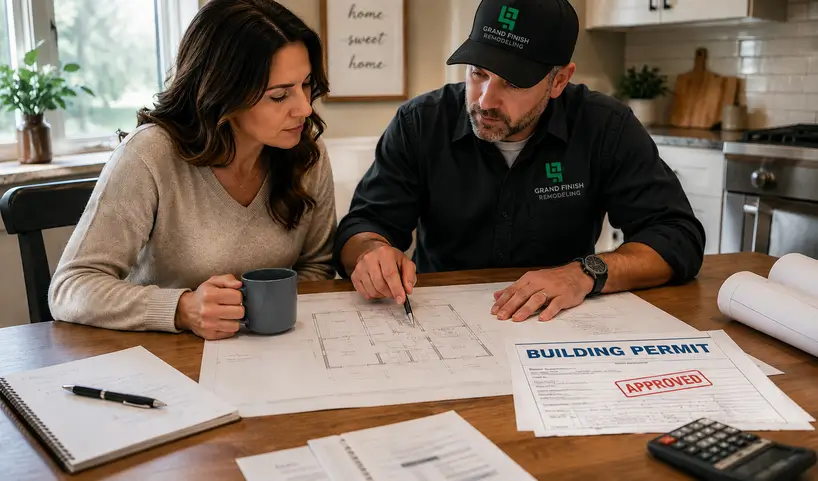
If you hire a licensed contractor, they should pull the permit. The contractor who does the work is responsible for code compliance, so they request the permit in their name (Mass.gov, Massachusetts law about home improvement, 2026). A homeowner doing the work themselves can pull it too — but with a catch.
Under the homeowner license exemption in 780 CMR, an owner performing work on their own home is exempt from the licensing requirements — but if they hire anyone for that work, the homeowner becomes the supervisor and takes on that responsibility (Mass.gov, 2026). In plain terms: pull your own permit and you own every code question that follows.
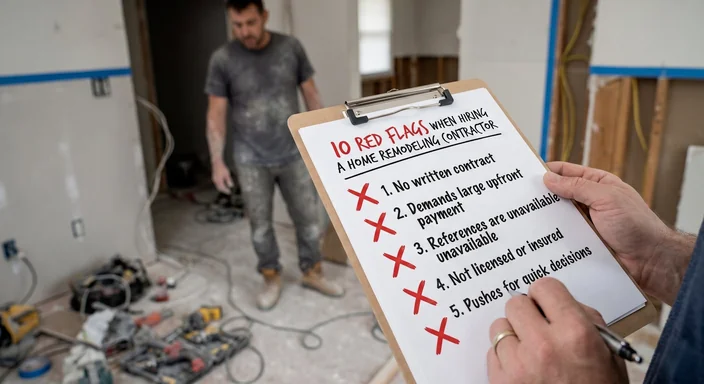
Here’s the part worth tattooing on the back of your hand: a contractor who won’t pull a permit is waving a red flag. When a bidder offers to “save you the permit fee” by skipping it, they’re not doing you a favor — they’re moving the liability onto you and leaving no inspection record behind. We pull permits on every project that needs one, and a reputable remodeler will too. For more warning signs, see our guide to the red flags when hiring a remodeling contractor and how to choose a remodeling contractor in MetroWest.
What Happens If You Remodel Without a Permit?
It gets expensive, and it follows the house. In Massachusetts, building without a permit can bring fines of up to $1,000 per day (LegalClarity, Building Without a Permit in Massachusetts: Penalties, 2025). And that’s just the opening cost.

Get caught mid-project and most towns require you to obtain the permit anyway — at a doubled fee — then uncover any covered work so it can be inspected, and correct anything that doesn’t meet code (Town of Marion, What happens if I do work without obtaining a permit, 2025). Picture opening a freshly tiled wall so an inspector can see the plumbing behind it. That’s the cost of skipping the step.
The damage doesn’t stop at the building department. Insurers can deny claims tied to unpermitted work — meaning a fire traced to an unpermitted circuit may not be covered (LegalClarity, 2025). And at resale, Massachusetts sellers must disclose unpermitted work; lenders demand documentation, and unpermitted finished space may not count toward your home’s official square footage (Sell Fast Boston, What If the House Has Unpermitted Work?, 2025).
That last point is the one homeowners underestimate. You finish a basement to add value, skip the permit to save a few hundred dollars, and then the appraiser can’t legally count those square feet. The “savings” quietly erased the value you built.
How the Permit Process Works, Step by Step
The process is more predictable than most people expect — six steps from idea to sign-off. None of them are complicated on their own; the work is in doing them in order and submitting complete paperwork. Here’s the path we walk every MetroWest client through.
- Confirm the scope. Call your local building department (or have your contractor do it) to confirm exactly which permits your project needs.
- Prepare the plans and documents. Drawings, specifications, and contractor license info, sized to the project.
- Submit the application and fee. File with the town; the clock toward the 30-day decision starts on a complete application.
- Wait for review. The building official approves or denies in writing within 30 days (Mass.gov, 2026).
- Schedule inspections. Work is inspected at required stages — framing, rough electrical and plumbing, and so on — before it’s covered up.
- Pass the final inspection. A final sign-off (and certificate where required) closes out the permit.
On a typical MetroWest kitchen or whole-home project, we handle steps 1 through 6 for the homeowner — pulling the permits, coordinating each inspection, and keeping the paper trail clean so the project closes out properly. For local homeowners, our Framingham remodeling team knows what each town’s building department expects before the first form is filed.
Frequently Asked Questions
Do I need a permit to remodel a bathroom in Massachusetts?
Usually, yes. If your bathroom remodel moves plumbing, adds or relocates electrical, or changes the layout, it needs permits under 780 CMR (Mass.gov, 2026). A pure cosmetic refresh — paint and a like-for-like fixture swap — may not. When fixtures move, plan on a permit.
Do I need a permit to finish a basement in MA?
Yes. Finishing a basement creates new living space, which triggers a building permit plus electrical and often plumbing permits (Mass.gov, 2026). Skipping it can mean the finished area won’t count toward your home’s official square footage at resale, erasing much of the value you added.
How much is a building permit in Massachusetts?
A major renovation permit typically costs $500–$1,500, with large projects and additions running $1,500–$5,000 or more (Omega Permits, 2026). Separate electrical, plumbing, and mechanical permits add $100–$600 each. Most towns set fees by project value or square footage, so confirm locally.
Can I pull my own permit as a homeowner?
Yes. The homeowner license exemption in 780 CMR lets owners pull permits for work on their own home (Mass.gov, 2026). The catch: if you hire help, you become the supervisor responsible for code compliance. Many owners prefer to let a licensed contractor pull and own the permit.
How long does a building permit take in MetroWest?
The town must decide within 30 days of a complete application (Mass.gov, 2026; corroborated by Omega Permits, 2026). In our experience, simple renovations are often approved within a couple of weeks, while complex work takes longer; historic or conservation review can add weeks.
The Bottom Line for MetroWest Homeowners
If your remodel changes structure, systems, or square footage, it almost certainly needs a permit — and the permit is the cheapest insurance you’ll buy on the whole project. To recap:
- Most real remodels need a permit; cosmetic refreshes usually don’t.
- Budget $500–$1,500 for a major renovation permit, plus the trade permits, and build the 30-day review into your timeline.
- Let your licensed contractor pull the permit — it puts the code responsibility where it belongs.
- Never skip it. Fines, denied insurance claims, and resale headaches dwarf the fee you’d save.
Permitting shouldn’t be the reason a great project stalls. At Grand Finish Remodeling, we handle permits and inspections as part of every job across MetroWest, so you get the renovation without the paperwork stress. Schedule a free consultation and we’ll map out exactly what your project needs.
Sources
- Mass.gov, Massachusetts law about home improvement, retrieved 2026-06-30, https://www.mass.gov/info-details/massachusetts-law-about-home-improvement
- Mass.gov, Building Permit Applications, retrieved 2026-06-30, https://www.mass.gov/building-permit-applications
- Mass.gov, 780 CMR Massachusetts Residential Code (8th edition), retrieved 2026-06-30, https://www.mass.gov/doc/8th-edition-780-cmr-massachusetts-building-code-780-cmr-5100-massachusetts-residential-code/download
- Omega Permits, Massachusetts – Building Permits: Costs, Risks & Steps 2026, retrieved 2026-06-30, https://omegapermits.com/blogs/guide-to-massachusetts-building-permits
- Omega Permits, Massachusetts Building Permit Timelines: 780 CMR, retrieved 2026-06-30, https://omegapermits.com/blogs/massachusetts-building-permit-timelines-780-cmr
- LegalClarity, Building Without a Permit in Massachusetts: Penalties and Consequences, retrieved 2026-06-30, https://legalclarity.org/building-without-a-permit-in-massachusetts-penalties-and-consequences/
- Town of Marion, MA, What happens if I do work without obtaining a permit (FAQ), retrieved 2026-06-30, https://www.marionma.gov/Faq.aspx?QID=83
- Sell Fast Boston, What If the House Has Unpermitted Work? Massachusetts Basics for Sellers, retrieved 2026-06-30, https://sellfastboston.com/what-if-the-house-has-unpermitted-work-massachusetts-basics-for-sellers/